Tampilkan postingan dengan label #VibeIsrael. Tampilkan semua postingan

10 Practices to Help Bilingual Students Succeed from a Tel Aviv School via #VibeEdu @VibeIsrael Tour

This is just one in a series of ongoing posts on the educational innovations in Israel. You can see additional coverage here. 

New York City is indeed a melting pot, and while New Yorkers embrace its diversity, teaching in a school where students are not fluent in English, and often are not even literate in their own language, is challenging. Students are often unable to perform at grade level, not because of their capacity to learn, but because of their capacity to understand the language. What’s more, after just one year in the country, foreign-born students are expected to perform on the same standardized tests as native speakers. When they don’t, there’s a domino effect: the student is labeled a failure. His parent feels like a failure. His teacher a failure, and if there are many such students in attendance, the school is labeled a failure. The failure however is not the student, teacher, or school. The failure is the a school system that is failing these students.


Does any of this sound familiar?


What if there was a way to change this scenario?


As one of five bloggers invited to be a part of #VibeIsrael’s #VibeEdu Education Innovation tour I had the chance to visit a school where none of this is the case. The Bialik Rogozin School provides a unique model where refugees and children of migrant workers, some of them with little or no schooling at all, are integrated into Israeli society with common sense educational strategies that any school or district could adopt. 
Students at Bialik Rogozin Scohol connect through the common language of the arts.
Here they dance to music from various cultures.
Here they are:
I want more »
What If Society Would Pay for Specialized Schools? #VibeEdu @VibeIsrael Tour Takeaways

What If Society Would Pay for Specialized Schools? #VibeEdu @VibeIsrael Tour Takeaways

Government schooling comes with strings of compliance, conformity, and dictatorship attached yet most of the elected officials determining what happens in these schools don’t send their own children to them. Even when they do, when you scratch beneath the surface you may find these are specialty schools that look very different from the rest. For example, in New York City, these are called Performance Based Assessment Schools. The students there don’t have the same requirements for the curriculum, standards, or assessments required by the rest of state. Instead they have more real-world and project based work and assessments. Montessori is a favorite school choice for many of the nation’s leaders. Waldorf schools are in favor for those who value an environment providing artistic development of pupils. The governor where I live sent his children to boarding school. Democratic schools provide another model that has become a popular choice among parents who value self-directed learning, that incorporates responsibility to community along with personalized learning for their children.


Why is it that all members of society don’t have access to these type of school that those with means select for their own children? This is the way it’s always been, but must it always be this way?


This is the question that came up in Israel nearly a quarter century ago. Citizens did not agree that if they chose to send their children to what they call a “unique” school, that this should mean no government funding is allocated to that student.  Parents mobilized for change so that funding was tied to pupils, regardless of the type of school, that their family felt was best. Today, for the most part in Israel, all schools receive per pupil funding from the government. Traditional schools are provided at no cost to families. Unique schools require families to pay a contribution of what comes to about $200 a month. Scholarships help poorer families pay the annual tuition. Students who come from truly impoverished backgrounds, have the opportunity to attend boarding schools like Mevo'ot Yam Youth Village. Immigrants and refugees have schools with substantial wrap-around services for students and their families such as the Bialik Rogozin School.
I want more »

How to Use Social Media to Change Perceptions - #VibeEdu @VibeIsrael Lessons

This is just one in a series of ongoing posts on the educational innovations in Israel. You can see additional coverage here.

If you're reading this blog you are likely involved with a school, district, museum or some other educational institution that is engaged in innovative practices. But do others know of the great work happening there? Is there a misconception about your school or district? Perhaps the community or even the world is not aware that in your district every student has a digital portfolio that can lead to academic and career success. Maybe your school has a Makerspace and 3D printing, but few know of the magic happening behind closed doors. Maybe the neighborhood is perceived as rough, but the the truth is that there is a strong, cohesive environment where the community comes together to ensure children are safe and watched after. What might you do to change or even drive awareness?


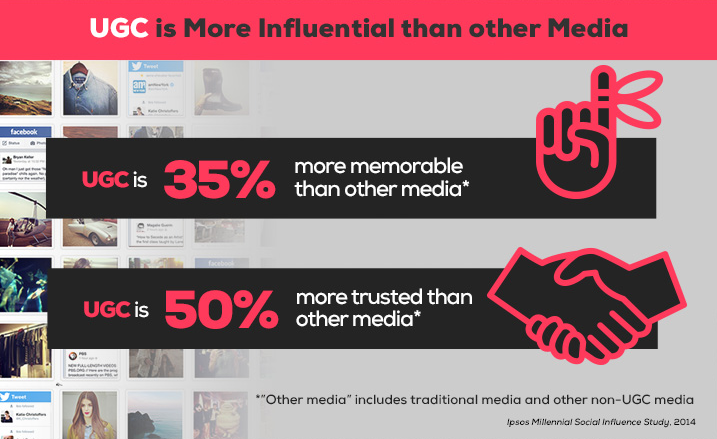
Typical practices might be to advertise in the local paper or on the local radio station. Maybe pass flyers out around the community.  Perhaps distribute a press release or maybe even buy a spot on a local television program. While those practices may have been the most effective in the past, today, there is a shift. When millennials want information, they don’t go to mainstream media, they look to UGC or “user generated content.” This means they don’t want to hear from the media. They want to hear what friends and peers have to say via updates and photos in places like Instagram, Facebook, Twitter, or blogs. And they spend a lot of time engaging with UGC from social media, in fact more time with any other media type. About five and half hours a day are spent with UGC and they trust and remember what they read from their peers more than any other source.


Check out the stats:
Source: Smart Blogs
I want more »
Youth Movements Allow Students to See A World Bigger Than Themselves - #VibeEdu @VibeIsrael Tour

Youth Movements Allow Students to See A World Bigger Than Themselves - #VibeEdu @VibeIsrael Tour

This is just one in a series of ongoing posts on the educational innovations in Israel. You can see additional coverage here. 

In America, this week marks a holiday break. How are the young people in your life spending their time? Some adults lament the activities of, “Kids today.” They are staring at screens using social media. They are playing games. They are watching TV. But the outlook shouldn’t be so bleak. If students are not doing wonderful things, we shouldn’t blame kids, we should look at the opportunities adults are providing to them. What if there was an opportunity in your community for youth to spend free time in meaningful ways with other youth?


In Israel, there is.
I want more »
15 Surprising Facts abt #Education In Israel - My #VibeEdu @VibeIsrael Tour

15 Surprising Facts abt #Education In Israel - My #VibeEdu @VibeIsrael Tour

This is just one in a series of ongoing posts on the educational innovations in Israel. You can see additional coverage here.  Israel is the #2 country in the world for students going to university and Israeli Jews have among the lowest unemployment rates for those under 30. Israel is home to the most start ups and PhDs per capita and is known for a culture that breeds creativity. It seems it might be worth taking a look at some of their educational practices that result in such success. Fortunately, I had an opportunity to do just that serving as one of five edubloggers to take in part in the #VibeEdu Innovation in Education Tour organized by Vibe Israel, a non-profit nonprofit focused on changing the way people think and feel about Israel. I spent a week crossing the country, visiting places schools and other educational institutions and meeting with the students and adults that are responsible for ensuring Israel remains a hub of innovation, and entrepreneurship.   While I was there, I learned these surprising facts that are in play in their education system. As you read each one, forget what you've been told about what education should be or has to be. Instead, think about what practices could be put in place in your school, district, or community to help students there achieve success. #1 Schools are segregated Most schools are segregated by religion and race as follows: 1-Secular schools offer the state-education curriculum in Hebrew as set by the Ministry of Education 2-Orthodox schools offer state-religious education in Hebrew, with greater attention devoted to religion and Jewish culture 3-Arab schools offer the state curriculum in Arabic, in combination with a greater focus on Arab history, culture and beliefs.
#2 Boarding schools are for disadvantaged youth In America Boarding schools are usually for privileged. In Israel they are mainly for disadvantaged youth and funded by the government. About 9% of the schools are boarding schools. This post shares an example of what one school looks like: http://theinnovativeeducator.blogspot.co.il/...

#3 Progressive schools are government funded
Progressive schools such as Democratic, Montessori, and Waldorf are all part of the national school system + funded by the government on a per pupil basis. Most people I spoke with found it strange that the United States government did not allocate money to all types of schools on a per-pupil bases. They referred to these type of schools as “unique”
I want more »

14 Lessons in #Education - Takeaways from Israel Via The #VibeEdu @VibeIsrael Tour

This is just one in a series of ongoing posts on the educational innovations in Israel. You can see additional coverage here.


#VibeEdu Bloggers pictured in a classroom designed
to support students with attention deficit.
I learned a lot about learning after serving as one of five edubloggers participating in the #VibeEdu Innovation in Education Tour organized by Vibe Israel, a non-profit organization with a mission to promote Israel as a vibrant hub of creativity, innovation and entrepreneurship. After a week of crossing the country, visiting places, companies, and organizations, and meeting students and adults, I discovered innovative practices that are incorporated into their schools and culture. 

Below are some of the lessons I learned that contribute to making Israel the #2 country in the world for students going to university and resulting in one of the lowest unemployment rates for those under 30. As you read each lesson think about which you may be able to use to support student success where you work.


1) Give and You Shall Receive
If you want community support, you must support the community. The First Robotics Y Team 3211 of Yeruham needs donations from the community to fund these young makers. The students don't just engage in innovative projects, but rather the projects they select often support the community. They have made several small cars which they call bimbas for children who are unable to walk.  You can see two of the children in the pictures below.
This strategy seems to have paid off in more ways than one. The team took the gold at 2014 FIRST Tech Challenge in the US. The Robotics team has a goal to reach 2000 likes on their Facebook page. The students ask that you please check out what students in Israel are doing with robotics by visiting and liking their page at https://www.facebook.com/frc.3211/
-The Y Team FRC 3211-Yeruham

I want more »